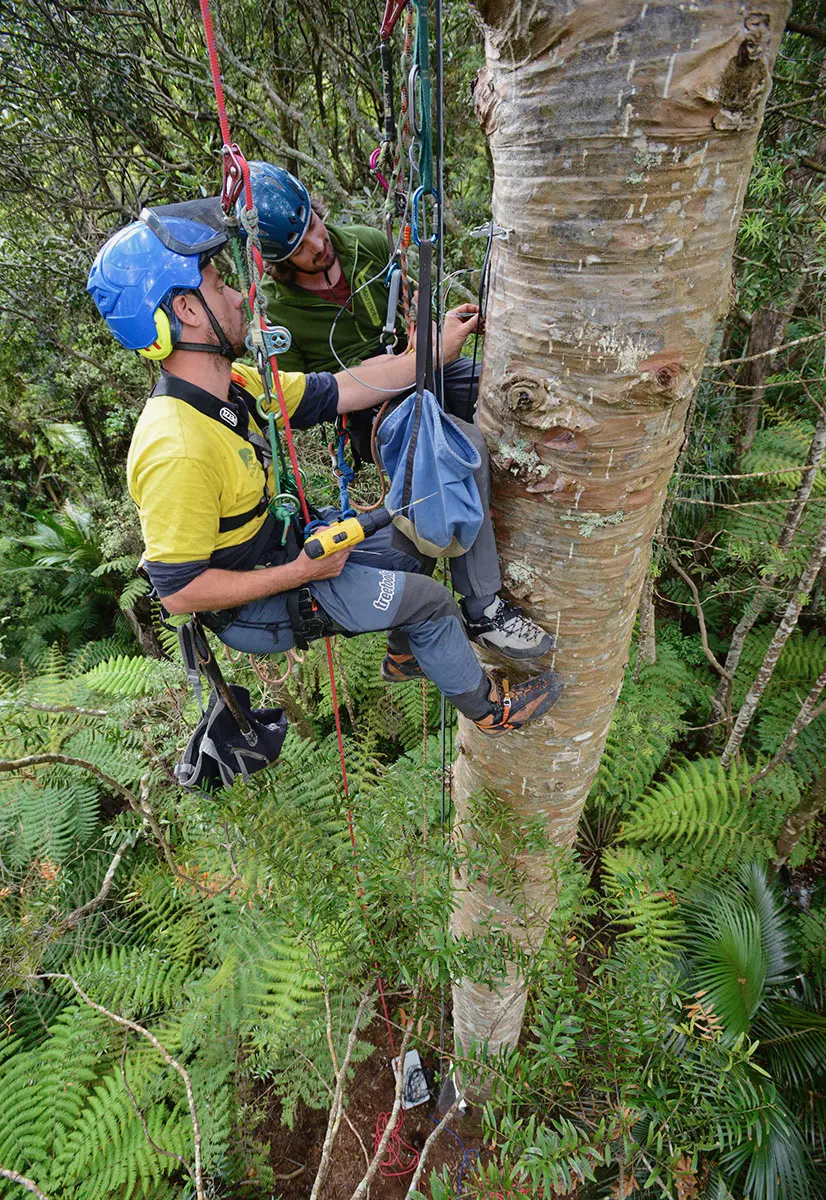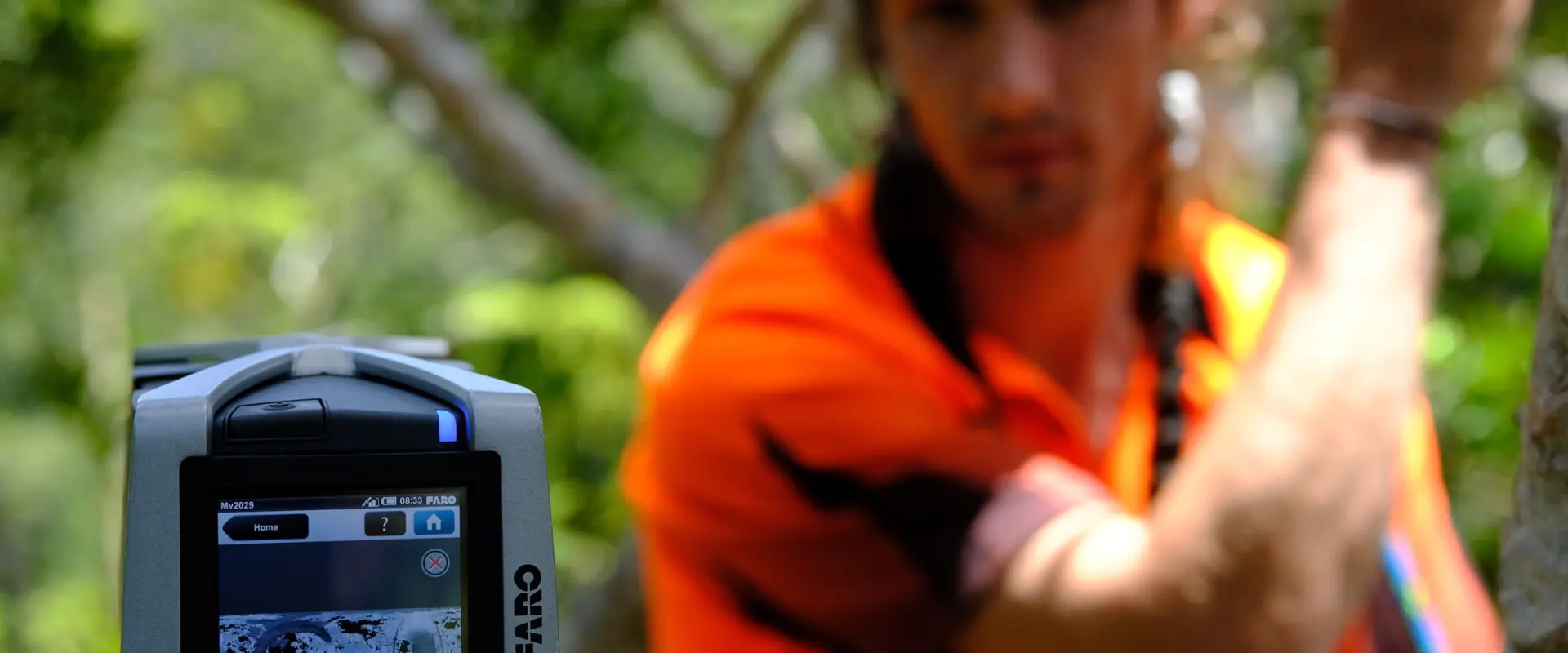
The forest canopy is a vital layer of the ecosystem—home to a rich diversity of plant, animal, and insect species. It plays a crucial role in forest structure, biodiversity, climate regulation, and ecological resilience. At Living Tree, we have decades in accessing and studying this dynamic zone through safe, science-informed, and culturally grounded practices.
We have managed aerial operations and conducted data collection for a wide range of canopy-related research projects. Our recent work spans:
- 3D scanning with terrestrial LiDAR
- Monitoring drought impacts on native trees
- Multispectral imagery for canopy decline and epiphyte identification
- Assessing nutrient deficiencies linked to root pathogens
- Measuring carbon fluxes in native forest systems
- Studying interactions among epiphytes, invertebrates, lizards, and rats
- Camera and track tunnel modelling for canopy fauna
- Hydraulic pressure and photosynthetic productivity analysis
- Xylem and phloem transport system monitoring
- Gaseous exchange studies in stomata
- Leaf collection for DNA sampling and whakapapa mapping of endemic species
- Carbon dating modelling through core and leaf sample
- Pathogens and pest studies, research and ongoing monitoring
Canopy Access Services
Our experienced team of qualified tree climbers enables safe, rope-supported access to the forest canopy to support research, conservation, and restoration efforts. We use the latest non-invasive climbing systems to protect sensitive ecosystems while facilitating high-quality data collection.
Our services Include:
- Data Collection
Installation of long-term monitoring equipment or targeted short-term data capture. All operations are conducted with minimal ecological disturbance.
- Climbing Facilitation
Supporting kaitiaki, volunteers, and scientists to safely access the canopy—bringing people closer to the ecosystems they study and protect.
- Project Management
Comprehensive worksite coordination including Health & Safety, biosecurity hygiene protocols, and risk management to ensure the safety of both people and ecosystems.